|
|
|
|
|
 |
|
| Norman Brown (University of Chicago, 1985) I’m interested in how people acquire, organize, and utilize real-world knowledge and autobiographical memory. In addition, I have been developing a general, multiple-strategies approach to mnemonic and numerical judgement that is concerned with identifying strategies people use, characterizing behavioral consequences of competing strategies, specifying factors that influence strategy selection, and improving estimation performance. [home page] |
|
|
|
 |
|
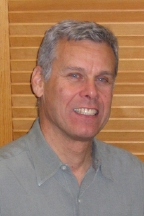
| Ed Cornell (Case Western Reserve University, 1973) We study human way finding and lost person behaviour. We are developing decision assist software that helps police manage searches for lost persons. [home page] |
|
 |
|
|
|
| Peter Dixon (Carnegie Mellon University, 1979) I am interested in a broad range of topics in areas such as vision, attention, motor control, word recognition, discourse processing, and problem solving. My recent research has focused on the role of vision and memory in action, the acquisition of operating procedures, and the comprehension of literary narrative. [home page] |
|
|
|
 |
|
| Alinda Friedman (University of Colorado, 1977) My research interests are in the area of spatial cognition. Current projects include (a) issues in object and scene recognition, such as the role of three-dimensional and motion cues, and how information from different views is integrated, and (b) issues in representation and reasoning about large-scale geography, such as the role played by categorical reasoning, large scale landmarks (e.g., the equator), and cultural biases. [home page] |
|
 |
|
|
|
| Christina L. Gagné (University of Illinois, Urbana-Champaign, 1997) I am interested in how conceptual knowledge affects the way people understand and use language. My current research focuses on how existing concepts can be combined to create new conceptual structures. I am also examining how people use language to convey information about such structures. [home page] |
|
|
|
 |
|
| Don Heth (Yale University, 1974) My research interests currently fall into four categories: human wayfinding and navigation; decision support tools for search and rescue management; comparative spatial cognition; and animal models of eating disorders. [home page] |
|
 |
|
|
|
| Thomas L. Spalding (University of Illinois, Urbana-Champaign, 1994) My research interests are broad, but all relate to the issue of how people combine information in the course of learning, comprehension, and inference. This overarching interest has led to research on concepts, conceptual combination, memory, word meanings, analytic reading, and expository writing, as well as peripheral interests in spatial cognition, conceptual development, and consumer loyalty. [home page] |
|
|
|
 |
|
| Chris Westbury (McGill University, 1995) My research focuses on the neurological underpinnings and functional structure of language. I have particular interests in co-occurrence models of semantics (and in statistical models of language more generally), in the interaction between phonology and semantics, and in non-linear models of variable interactions in lexical access. One line of my work focuses on how language breaks down following brain damage. [home page] |
|
|
|
|
|
|
|
|
|